


Every year, I tense up when it comes time to write up our top ten films of the year. I don’t want to do it. I am aware that this is ridiculous, but the pressure of writing about the ten best films of the year – the films that most impressed me, most dazzled me, most moved me – is always high. Condensing my thoughts on these films down to one paragraph each is hard enough, but writing something that feels worthy of these films that I loved so much is even harder.
And then there are all the films that I have to leave off the list! 2025 was a fantastic year for film. Many cried about how thin the first half of the year was, but I disagree. The first half of 2025 gave us Steven Soderbergh’s one-two punch of inventive ghost story “Presence” and crazysexycool spy thriller “Black Bag,” Osgood Perkins’s devilishly deranged “The Monkey,” and Carson Lund’s minor-key masterpiece “Eephus,” the extremely rare film that managed to get me, a sports agnostic, emotional about baseball. It’s also when we got Ryan Coogler’s “Sinners,” as perfect a blend of arthouse and blockbuster sensibilities as has graced cinemas in years. And the second half of the year was just an embarrassment of riches, from the films of this year’s strong Cannes lineup (which I still can’t believe I got to experience in person) to the last-minute qualifying releases. I had genuine love for my top sixty films of the year, nearly all of which could have been in my top ten in a different year.
As for the films that came closest to making this list, I fell head over heels for Alexander Skarsgard in Harry Lighton’s disarmingly sweet BDSM romance “Pillion“ and gave my whole heart to Elizabeth Olsen in David Freyne’s quietly subversive “Eternity.“ I felt the spark between Tom Blyth and Russell Tovey in Carmen Emmi’s thrilling coming-out drama “Plainclothes,“ while Oona Chaplin’s delicious villain lit me up in “Avatar: Fire and Ash.“ I was rapt throughout the stunning Japanese Kabuki epic “Kokuho“ and felt immersed in the many new lands of “Zootopia 2.“ I reveled in the rich characters and thoughtful dialogue in Eva Victor’s “Sorry, Baby“ and Richard Linklater’s “Blue Moon.“ I laughed my ass off at “Fackham Hall“ and was happy to let Rian Johnson and Daniel Craig take me to church with “Wake Up Dead Man.“
But these are my ten favorites of the past year.
10. The Ballad Of Wallis Island
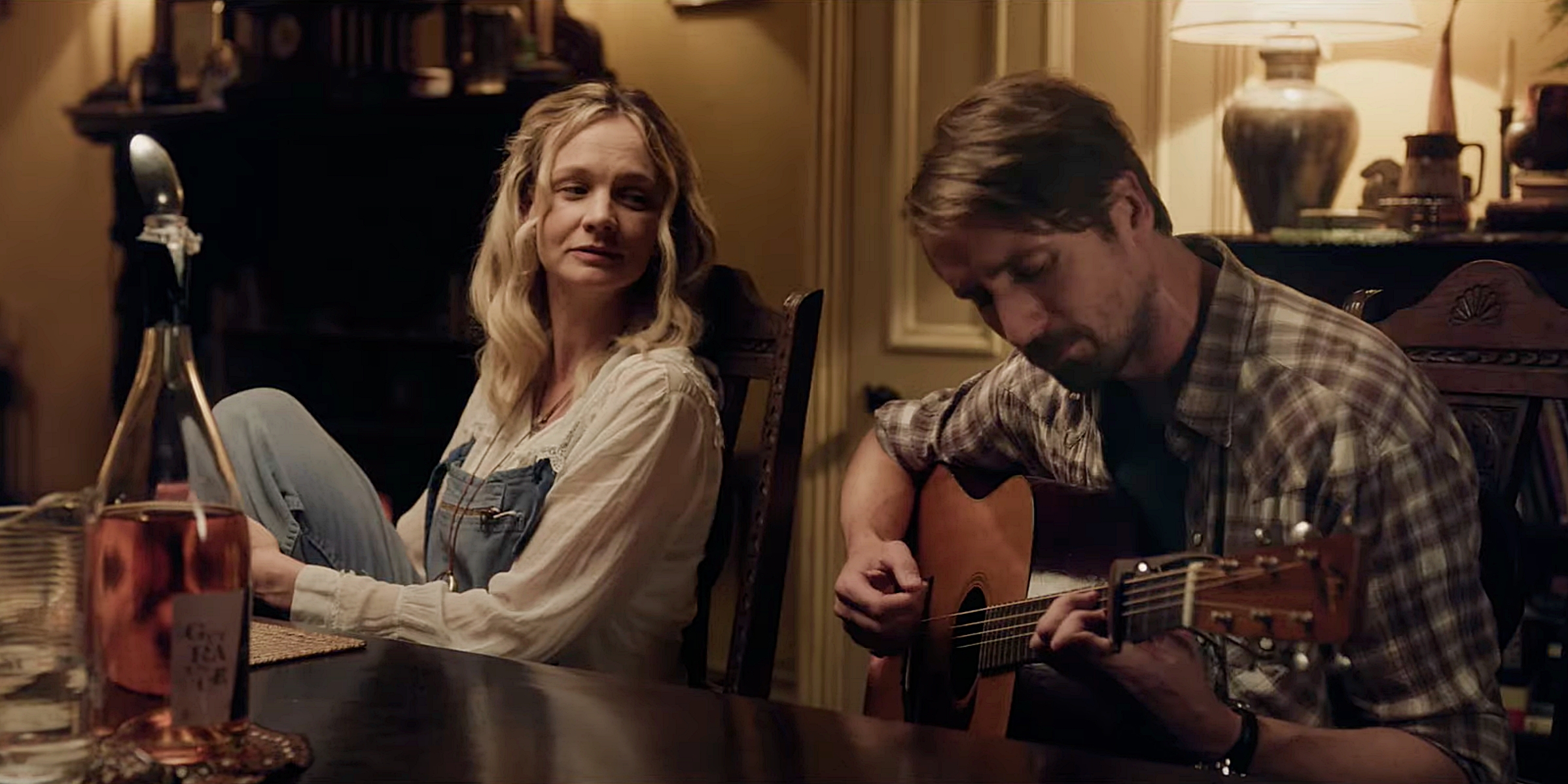 The last new film I watched in 2025 was one of the best. With some of the funniest wordplay of the year sitting comfortably next to the most soul-bearing drama, “The Ballad of Wallis Island” is simply a marvel. The story sounds like heartwarming schmaltz – a sweet former nurse and lottery winner brings his favorite music duo, who used to be in love but fell out around the same time they stopped recording as a duo, back together for a private concert at his remote island home – but the sublime execution turns it into something much deeper. The air of melancholy hanging over all the characters helps, but the sharply observed dynamics between them, in both script and performance, are what really set the film apart. The screenplay, written by British comedians Tom Basden and Tim Key, focuses on character just as much as making the audience laugh, giving the film unexpected depth. Yes, it’s hilariously funny, but director James Griffiths perfectly mixes everything together so that the humor and heart complement each other in the best possible way. Add in a phenomenal trio of central performances from Basden, Key, and Carey Mulligan, and some lovely, tuneful original songs, and this becomes one of the most perfectly baked cinematic soufflés of the year.
9. No Other Choice
 No other film in 2025 made my jaw drop as many times from sheer cinematic inventiveness as Park Chan-Wook’s “No Other Choice.“ Anyone could tell an entertaining story about an unemployed man driven to believe he has no choice but to kill his competition to find work again. Still, only a stark raving genius like Director Park could make one this wildly funny and formally playful. The man has always had an eye for editing transitions, but the ones here are on another level. It is just wild stuff, some of which feels like things I’ve never even seen before. Lee Byung-Hun’s brilliant performance is a comic masterclass, pulling his face like Jim Carrey and flailing his body around like a real-life cartoon character without ever making it look silly or out of place. Making people laugh is serious business, and no one knows that better than Park, who directs this with the verve of someone with something to prove. At this point in his career, the man has nothing left to prove, but I hope he keeps making movies like he does, because if “No Other Choice“ is evidence, then he’s got even more wild shit up his sleeve, and I can’t wait to watch.
8. One Battle After Another
 I know that it’s kind of boring to include “One Battle After Another” in your list of top films of 2025. But, please, understand: This is the first time I have ever had a Paul Thomas Anderson film in my top ten of the year. I’ve usually admired his films more than I enjoyed them, but “One Battle After Another” is so entertaining and so multi-layered in its satire that it turned me, a PTA agnostic, into a PTA acolyte. No one has ever done it quite like him, but the fact that, even with a big budget from a major studio, he made something so idiosyncratic yet so much fun and involving to watch makes him a cinema God. His characters are so richly drawn, and his perfectly cast actors embody them with ease in all their complexity. The dialogue sparkles with sharp wit and spiky personality. And on top of all that, it’s his most personal film to date, a love letter to his daughters from a father who knows he’s a bit dopey at times but will sacrifice everything for them, wrapped up in an up-to-the-minute tragicomic sociopolitical satire. Endlessly rewatchable for its lovable characters, memorable performances, masterful control over tension, and jaw-dropping VistaVision cinematography, “One Battle After Another” is just undeniably one of the best films of the year.
7. Materialists
 The year’s most misunderstood film by a mile, thanks in no small part to a marketing campaign that really leaned into the film that this appears to be in its first third, but ultimately isn’t. Celine Song is far too fascinated by human beings to make such a straightforward rom-com, but in its own strange and subversive way, “Materialists” is a great romance. The fact that it’s about two people learning to love themselves as much as each other makes it that much more special and resonant. Dakota Johnson and Chris Evans turn in performances of deep sensitivity and subtlety, ranking among their best yet, a cinematic OTP for the ages. But what I love most about “Materialists” is how great a New York movie it is. Living here can grind you down and wear you out, pushing you to do things you never thought you could or would, and those with money live a very different life here than those without it. Song captures all that and more so beautifully, creating a love letter to Manhattan that acknowledges that in order to make it here, you may have to make some hard compromises. But just like those we make for the ones we love, they’re worth it for what you get out of them.
6. Splitsville
 They say that dying is easy and comedy is hard. If that’s the case, then no film this year must have been harder to make than Michael Angelo Covino’s “Splitsville.” Covino’s sophomore outing does so many things at such a high level that it’s almost mind-boggling, and yet it does them with such ease that you wonder why we haven’t gotten more films like this. Once again writing with his co-star Lee Marvin, Covino’s thoroughly modern comedy of manners gets every kind of laugh possible, with witty wordplay, sharp comedic editing, some gobsmacking long takes that perfectly capture all the comic chaos, and the best physical comedy of the year, especially in a jaw-dropping fight sequence that made the audience at the film’s Cannes premiere applaud. It’s rare that an American comedy, let alone one this broad, premieres at the most prestigious film festival in the world, but “Splitsville” is just as technically assured in its filmmaking as it is in its humor, making it thoroughly worthy of the honor.
5. Sentimental Value
 We don’t get to choose our family, and sometimes it feels like that’s a license to cut them out whenever we want. The only thing we share is DNA, so if we don’t have anything else in common with our family, the best course of action can be to leave them behind, especially if their presence is harmful to our own safety. The problem, though, is that no one knows us quite like our family. Regardless of whether we like each other, we spend the better part of our lives together and know things about each other that no one outside our family home will ever know. Joachim Trier’s “Sentimental Value” understands this better than almost any other film I can name. The flawless ensemble members all have their finger on the pulse of the ties that bind their characters together, finding nuance in every fleeting expression and throwaway line. Trier makes a universal story out of these very specific characters, tapping into a very different kind of malaise as in his last film (and his last collaboration with the great Renate Reinsve), “The Worst Person in the World,” with equal success.
4. The Life Of Chuck
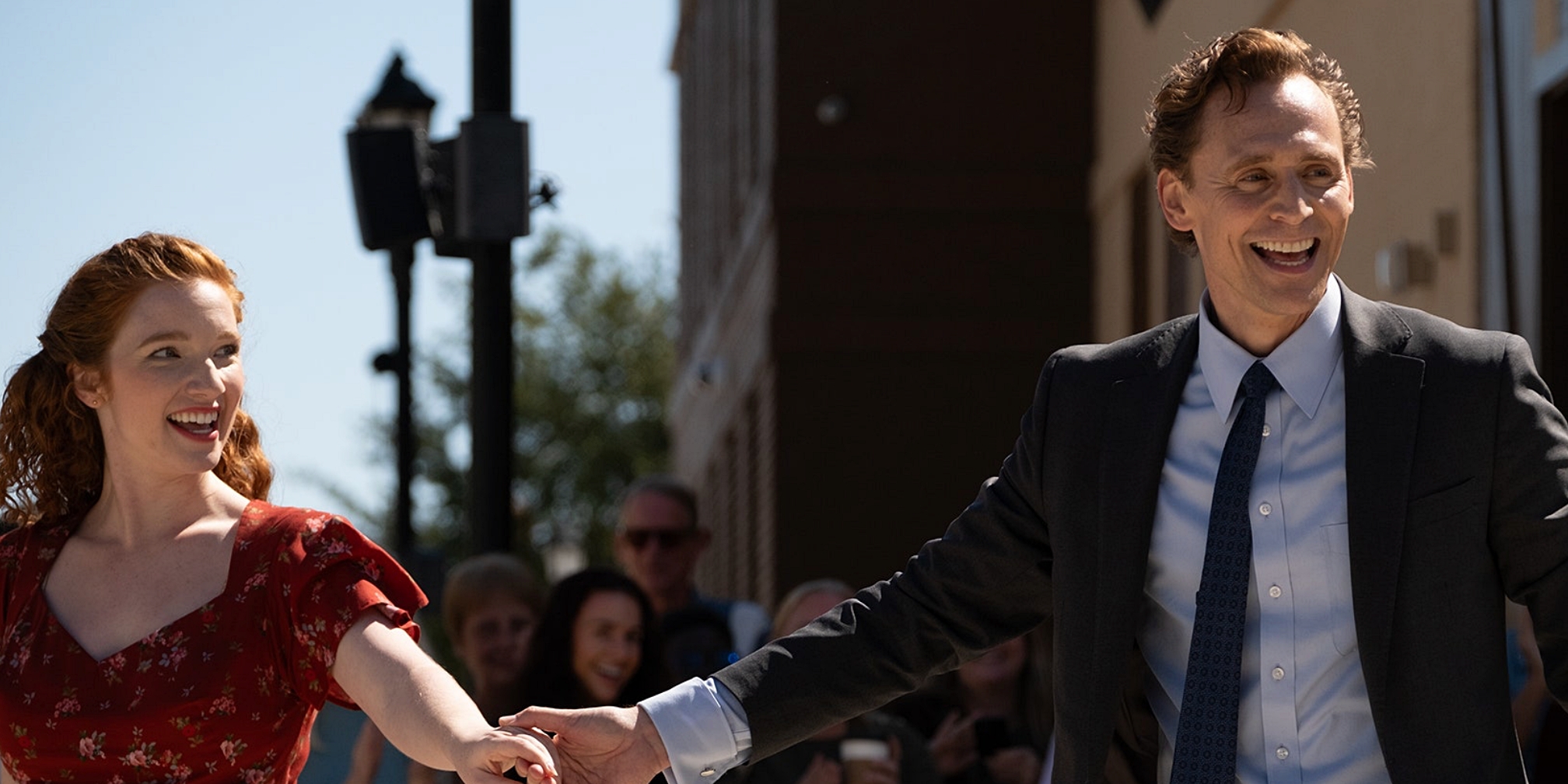 I’m still riding the high off the dance sequence that happens midway through Mike Flanagan’s “The Life of Chuck.” When Tom Hiddleston’s titular accountant hears the drumming of a street busker and, for whatever reason, can’t stop himself from dancing, eventually pulling a young woman from the crowd to join him and improvising a performance that causes everyone nearby to stop and enjoy, I get a rush every time. This is one of those sequences that feels destined to become a part of the cinematic lexicon even as the film itself fades away; it’s as unfettered an explosion of joy as has ever been put to screen, perfectly engineered to leave the audience on a high. That high sustains throughout the film’s third act, especially during Mark Hamill’s devastating monologue to the younger Chuck, extolling the virtues of math as a field of study that leads to a stable career rather than more soulfully fulfilling artistic pursuits. Anyone who loved the performing arts as a kid has heard a version of this speech at some point in their lives, and Flanagan captures Chuck’s conflicting desires to please his grandpa and follow his own bliss with pitch-perfect devastation. “The Life of Chuck” is many things, but to me, it is first and foremost a story about the joy that young boys deny themselves when they dismiss dancing as beneath them. Everyone deserves to feel the joy of losing themselves in a dance, especially with another person, and far too many scoff at it. Flanagan captures that breathless joy so perfectly that I can only say one thing: Thanks, Mike.
3. The Testament Of Ann Lee
 Not much is known about the Shakers, but their hymns live on. Taking inspiration from their repetitive lyrics and looping melodies, Mona Fastvold creates a hypnotic tale of one woman’s fight to find meaning in a hostile world. It’s impossible not to compare “The Testament of Ann Lee” to Fastvold’s partner Brady Corbet’s 2024 film “The Brutalist”: The films play like flip sides of the same coin, with male/female, Jewish/Christian, 1900s/1700s dichotomies being used to explore the rot that has always existed in the foundation of the American dream. Amanda Seyfried’s rapturous performance fully explicates Ann Lee’s inner turmoil without ever judging her, taking a skeptical view of her religious revelations while still earning the audience’s empathy. The actress has long deserved a musical all her own, and her angelic singing voice fits perfectly with Daniel Blumberg’s brilliant orchestrations, which get darker and weirder as the film goes on, until an electric guitar riff during an eclipse takes everything to the stratosphere. With incredible choreography that visualizes the Shakers’ ineffective (if well-meaning) attempts to substitute religious ecstasy for orgiastic pleasure and stunning cinematography that makes powerful use of natural light, Fastvold’s film is nothing short of heavenly.
2. Hamnet
 Chloe Zhao’s previous films enraptured me on an aesthetic level while holding me at an emotional remove, but not so with “Hamnet,” her adaptation of Maggie O’Farrell’s novel speculating about how the death of William Shakespeare’s son inspired some passages of his play “Hamlet.” Lukasz Zal’s lush cinematography, Max Richter’s aching score, and the deeply felt performances of the cast all came together to absolutely flatten me, reducing me to a quivering puddle of tears by the film’s midway point. But the beautiful thing about “Hamnet” is how Zhao and O’Farrell raise you out of the depths of despair with the film’s glorious ending. Without altering the play’s ultimate meaning, they show how an artist’s personal pain can reverberate through their art, becoming a catalyst for communal healing. The power of theater to evoke emotional catharsis has been a theme of several films in recent years (two of my 2024 top ten, “Ghostlight” and “Sing Sing,” come to mind), but none have reached the transcendent heights of this film’s climax. Yes, the concept of it may make you roll your eyes, but in execution, there’s something so beautiful about a whole theater reaching out towards someone in pain, giving up a little piece of themselves to support them. Zhao’s vision may feel a bit too utopian, but her vision of light reaching even the darkest places of the human heart is all the more powerful for that; displaying empathy is both so much easier and so much more meaningful than we make it out to be. I will never forget the collective catharsis I experienced with the audience at the press & industry screening at this year’s TIFF, from the melancholy sniffles in the theater to the joyous hugs outside afterwards. What a special thing, to experience such a special work of art with a crowd that, as the film says, kept their hearts open.
1. Resurrection
 Looking back at 2025, the thing that defined my year was covering the Cannes Film Festival for the first time. While I saw lots of great films, I didn’t see anything that made me look at the cinematic art form in a different way until the penultimate evening. Bi Gan’s “Resurrection” was the masterwork I had been waiting for the whole festival. A collection of five short stories that are tied to one of the five senses and filmed in a style pulled from a different era in Asian cinema, wrapped up in a sci-fi/fantasy framing device that argues for cinema as the individual and collective dream that sustains us throughout our lives, this feels like a late-period work from a filmmaker with a decades-long career, making his grand statement about what cinema means to him. In actuality, though, this is Bi Gan’s third feature film, and he’s not even forty. I was a fan of his last film, “Long Day’s Journey Into Night,” but “Resurrection” is even more ambitious, more exquisite, and more accomplished. The undeniably gorgeous imagery perfectly complements the film’s philosophical stories, and even though the screenplay feels too dense with ideas and philosophical musings, the film sustains a magical, mesmerizing aura that doesn’t matter. Everything comes together for a final sequence that had me levitating in the Salle Débussy, and on cloud nine for hours afterward. This transcendent beauty of a film had me marveling at the craft on display, but it also made me think long and hard about what cinema means to me, how the artform has changed over its century of existence, and where it’s going in the future. Wherever it goes, I do not doubt that Bi Gan will be at the forefront, pushing it to gorgeous new heights.
And that’s that for me on 2025. What do you think of my list? What made your top ten for this past year? Please let us know in the comments section below or on our X account. Check out the rest of the NBP team’s lists here and be on the lookout for more of our Top 10’s for 2025 as we prepare for our annual NBP Film Awards and the NBP Film Community Awards. Till then, thanks for reading.
